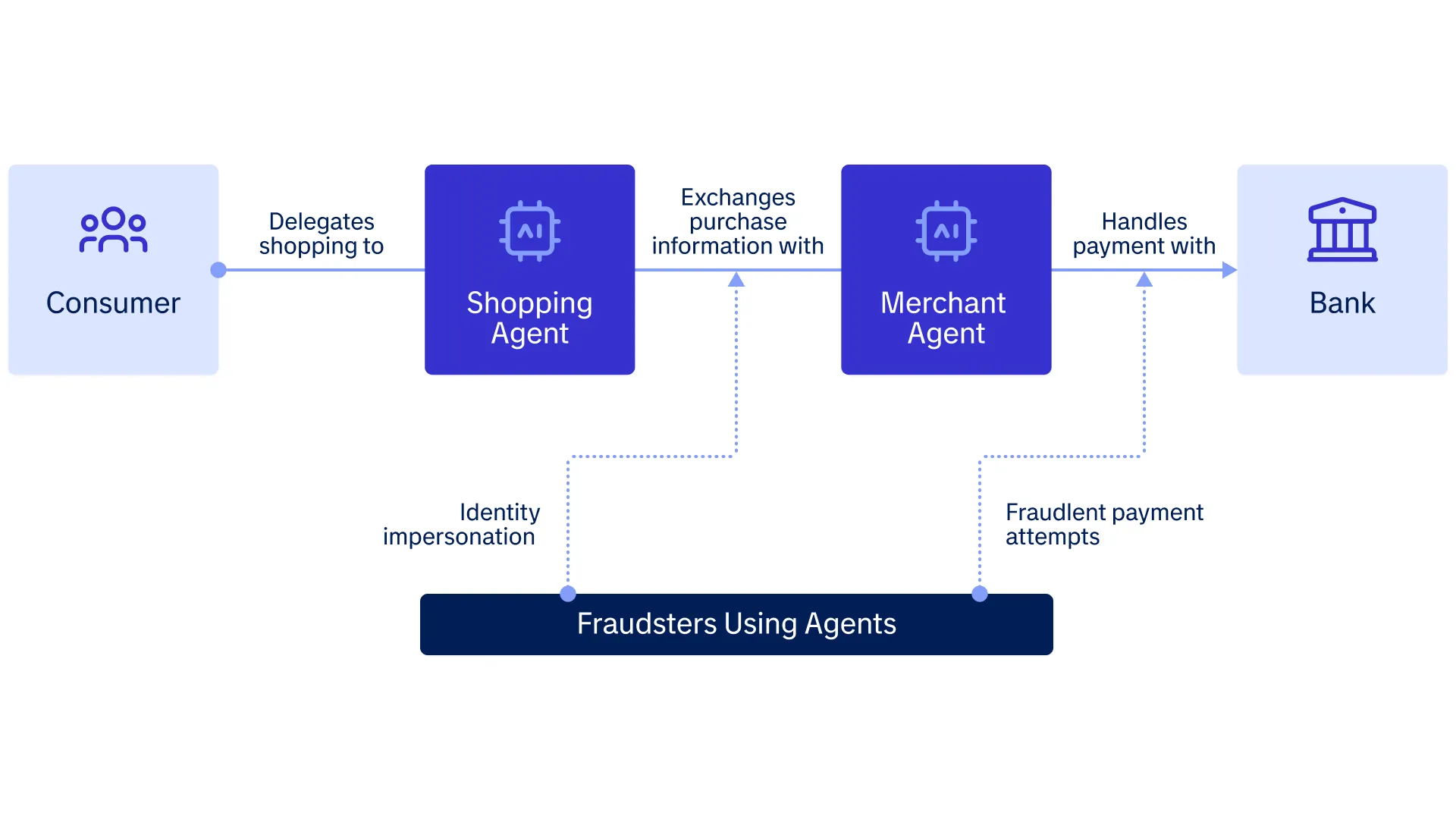
Agentic: already here for fraudsters, too.
Banks and fintechs should understand the present reality of the agentic economy. Too often, we’re given the impression agents belong to the future. In fact, the number of agents in use across Europe is growing exponentially, as is agent-to-agent dialogue: in the last six months, the use of agents by European SMEs grew by more than 800%, according to Eurostat. Meanwhile, consumers no longer see agents as science fiction, with more than 50% of European consumers now saying they are comfortable using them to compare prices and find deals.
At Tieto Banktech, our Defence Center constantly monitors global fraud trends to protect our clients and their end customers. Our analysis shows criminal groups are becoming more sophisticated, employing powerful new technologies to improve and scale their activities. For instance, social manipulation fraud grew by more than a third last year, as criminals successfully faked identities to dupe authentication mechanisms.
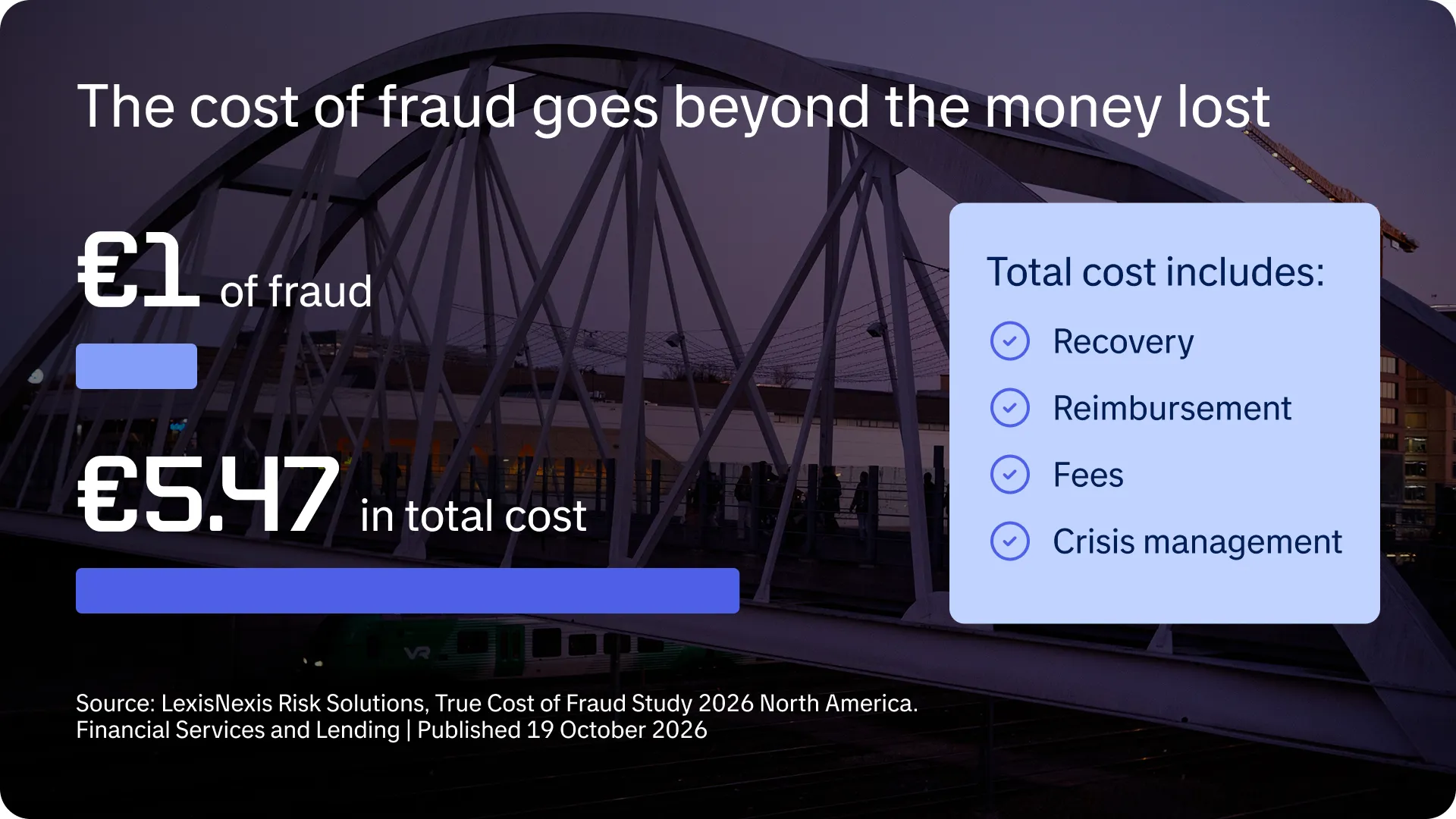
Fighting this level of criminal sophistication needs a change of approach. Fraud teams should fight fire with fire, employing agentic AI to prevent new forms of ID theft, fraud and money laundering. And with new regulations ahead, using sophisticated machine learning techniques is likely the only way to stop fraud while keeping costs down. According to LexisNexis, every dollar lost to fraud this year (2026) will cost financial services firms $5.47 in overheads, 52% of which is operational overheads and 48% the cost of reimbursement; a separate study by The American Bankers Association4 tell us these costs have more than doubled in the last two years.
New regulations need new approaches
The EU’s new AML-R regulation will apply more stringent criteria in many categories from 2027, widening the scope of AML checks to include new merchant categories and new transaction types.
Taking these new requirements into account alongside rapid growth in the sophistication of criminal techniques, it’s clear that using adaptive, self-regulating agentic models is the only way to combat criminal activity in the agentic age.
Failure to do so creates two risks: firstly, the risk of repeated fraud by malicious agents that successfully overcome authentication systems; and secondly, an unsustainable increase in the cost and time banks devote to identifying fraud and money laundering.
Fighting financial crime and maintaining regulatory compliance already costs Europe’s banks tens of billions every year. As the agentic economy grows, continuing to use existing approaches will place an unmanageable burden on banks unless they use agents and AI to fight fraud.
To help banks in this fight, we’ve developed a modernized AML solution, AML Explore, which uses our proprietary ATLAS AI model, a self-supervised Large Financial Model, to detect emerging fraud vectors and suspicious transactions while reducing the number of false positives banks must review manually.
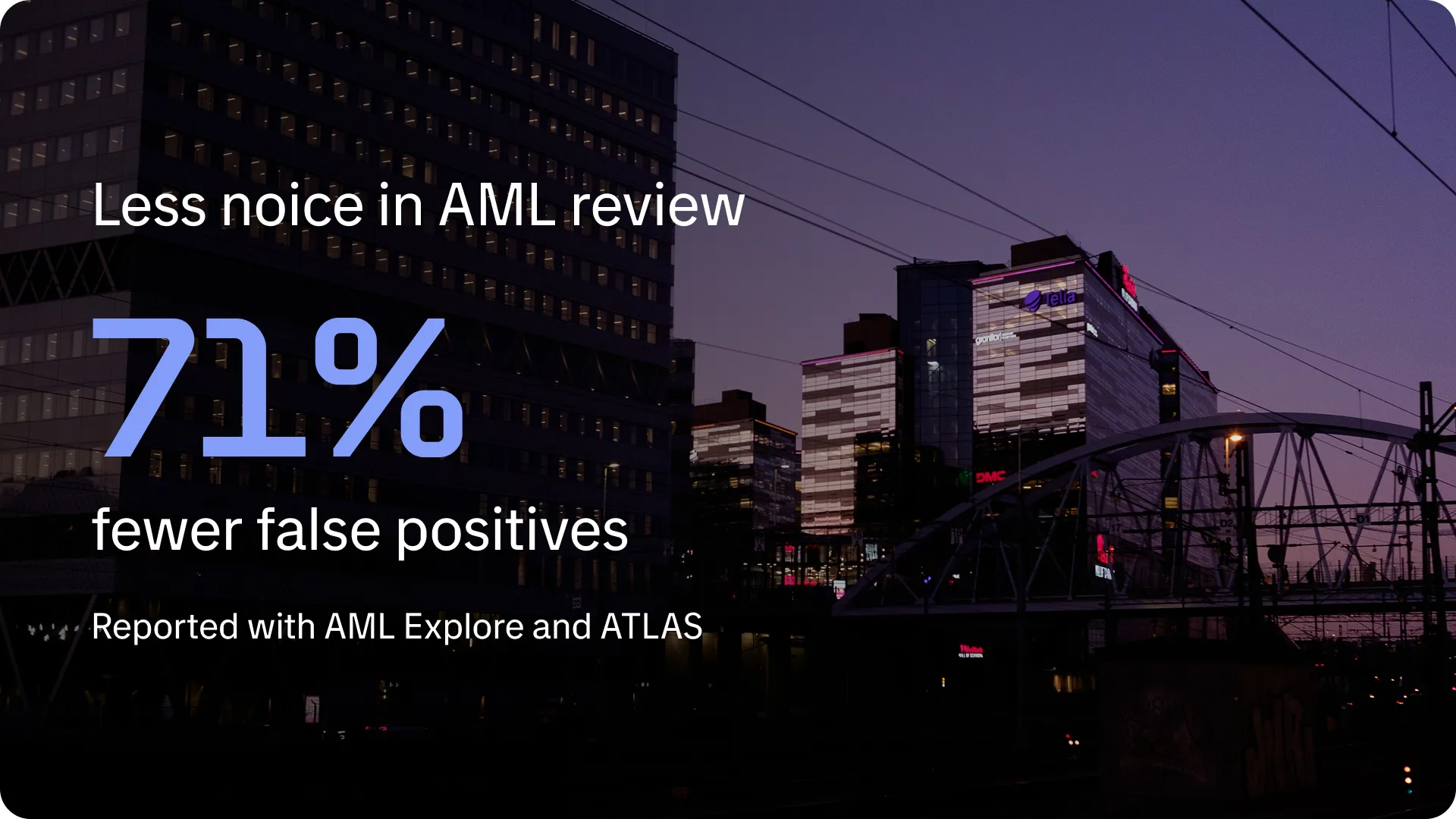
Our internal data shows that this approach reduces false positives by 71%, saving huge amounts of time on false alerts, one of the biggest cost factors in AML defence. Taken together, these two products deliver a low-cost, highly effective fraud defence system that’s already in use by our core customers in the Nordics and elsewhere.