
After four days of sessions and conversations in San Francisco, one message stood out: AI is moving from experimentation into the heart of how organizations work. For business and technology leaders, the challenge is no longer simply understanding what AI can do, but identifying where it can create meaningful value, what foundations are needed and which capabilities are ready to scale.
As a Microsoft Frontier Partner, we see four practical priorities for enterprises.
1. Redesign work around people and agents
Microsoft’s ambition for Copilot goes well beyond an assistant that helps with individual tasks. Chat, Office, code and shared workspaces are coming together so people and agents can collaborate across documents, applications and workflows from one environment.
This brings work design to the forefront of AI adoption. The important questions go beyond how many employees use Copilot and how often: which activities are best suited to agents, which should remain human-led and where can human–AI collaboration improve quality, speed or customer experience?
Several of the capabilities highlighted at Ignite are still in preview or Frontier. Enterprises should therefore avoid building a roadmap around announcements alone. A practical starting point is to select one high-value process, map the hand-offs between people and agents, and test the redesigned workflow against clear business outcomes before expanding it.
2. Make enterprise context a governed asset
As powerful models become widely available, the model itself becomes less of a differentiator. Context becomes the differentiator - an understanding of the organization’s people, processes, applications, documents, data and decisions.
Microsoft IQ brings this context together for Copilots and agents. Work IQ connects Microsoft 365 activity; Fabric IQ adds business data and semantic models; Foundry IQ grounds custom agents in document knowledge; and Web IQ adds relevant public information. The goal is AI that understands the business environment in which it operates, not only the prompt it receives.
But AI will inherit the limitations of that environment. Fragmented data, unmanaged permissions and knowledge that exists only in people’s heads will restrict the value agents can create. Before deployment, enterprises should review the data, permissions, owners and documented knowledge required for the priority use case, then address the highest-risk gaps first.
3. Put control and economics in place before agents scale
Moving from one Copilot to many agents changes the management challenge. Leaders need to know what each agent is, who owns it, what it can access, what it is doing, how it is secured and whether it is delivering the intended result.
Agent 365 points towards a control plane for this environment, supported by identity, security and policy capabilities across Microsoft Entra, Defender and Purview. FinOps for AI adds another essential discipline by connecting usage and cost to work completed and value delivered.
This is the practical test - if fifty agents were operating across the business tomorrow, could you see their actions, control their access, understand their cost and demonstrate their value? Enterprises should establish an agent register, named business owners, access policies and cost-to-value measures before moving beyond pilots. Regular portfolio reviews can then identify which use-cases to scale, optimize or stop.
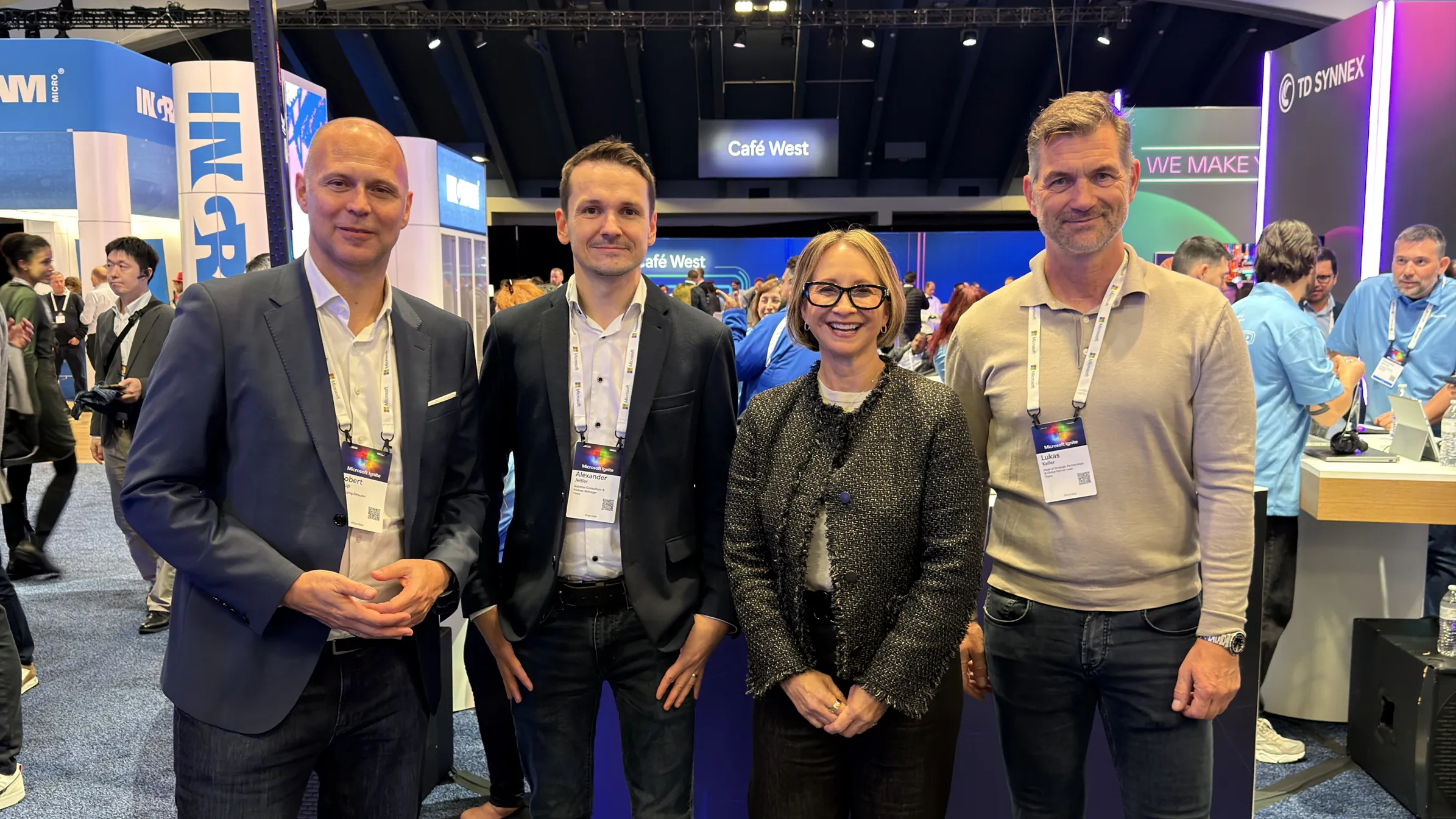
Robert Kaup, Alexander Jeitler, and Lukas Keller from Tieto Tech Consulting with Nicole Dezen, Microsoft CVP Global Partner
4. Treat AI as the operating model, not another tool
Taken together, the Ignite announcements point to a broader conclusion. Frontier Transformation is not another technology deployment. Copilot changes where work happens. Microsoft IQ provides enterprise context. Agent 365 adds control, while FinOps connects investment to measurable value.
This is also what distinguishes a Frontier Partner. The role is not to add more tools to an already noisy landscape, but to connect the journey end to end - readiness, solution design, build, governance, operations and continuous optimization. At Tieto, we combine Microsoft expertise across Azure, Fabric, Copilot and agentic AI with capabilities in design, data, cloud, security and software engineering. This helps customers turn enterprise context into working solutions and working solutions into repeatable business impact.
For enterprises, the next step is to build a focused Frontier roadmap around measurable business outcomes. Context readiness, solution design, governance and value tracking should be planned together, with explicit decision points for scaling.
Less noise, more deliberate progress
If Ignite made one thing clear, it is that success with AI goes beyond tool adoption and depends on how deliberately organizations redesign work, give AI the right context and establish the foundations for trusted, economically sustainable AI at scale.
A big thank you to our Tieto team at Ignite – Chris McLeod, Jacob Koelln, Alexander Jeitler and Robert Kaup – and to everyone we connected and exchanged ideas with during the week.
Want to explore how Microsoft’s latest AI capabilities could create value for your organization? Learn more about our Microsoft partnership or get in touch with our Microsoft team.

